


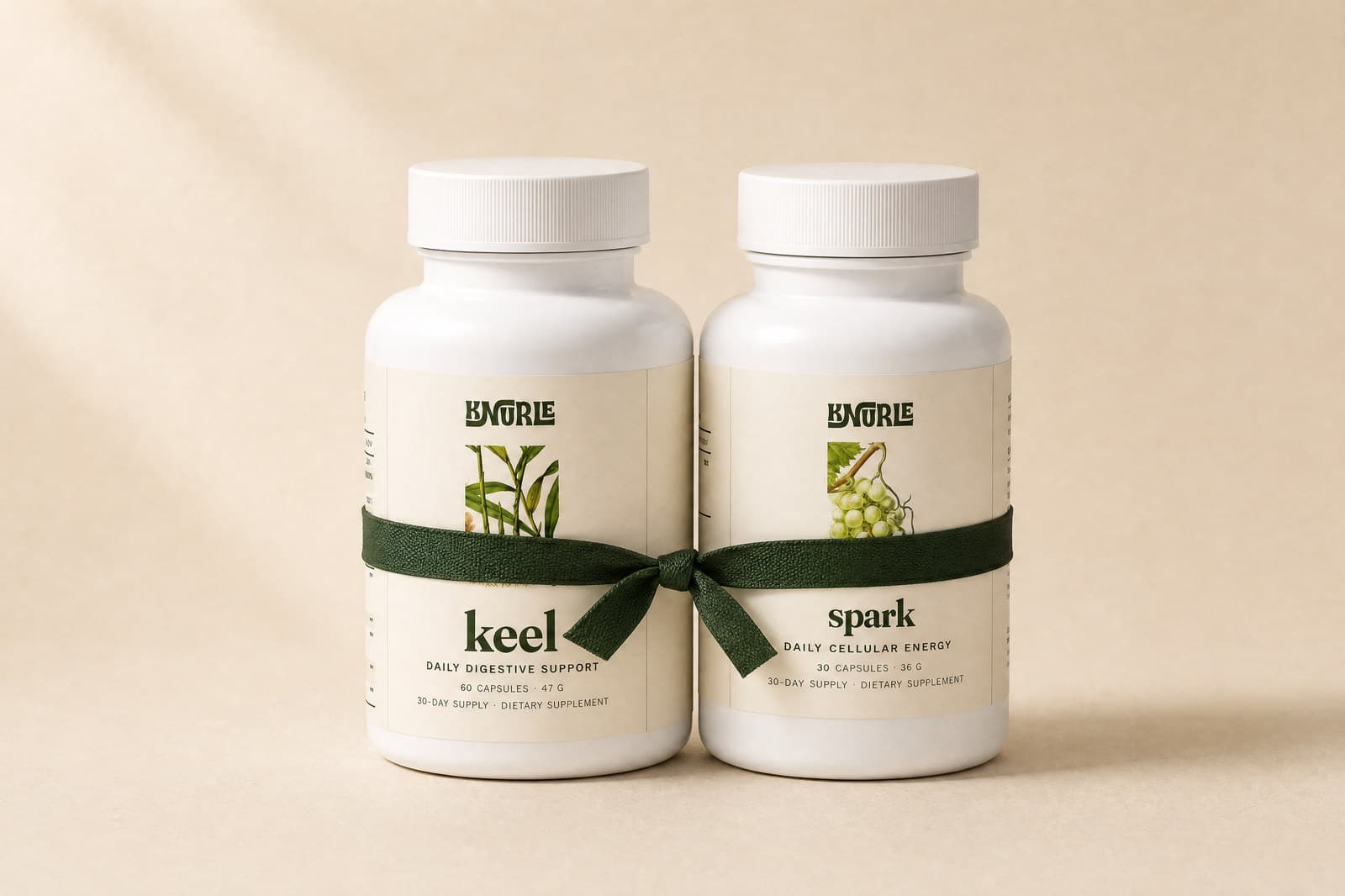
The Longevity StackKeel + Spark$103.50$115.00


1
Ingredient
1
Cap a day
30
Day supply
0
Blends
Add $50.00 more for free US shipping
$0.00 / $50.00
Made in the USA in an FDA-registered, GMP-certified facility. Ships from Colorado.
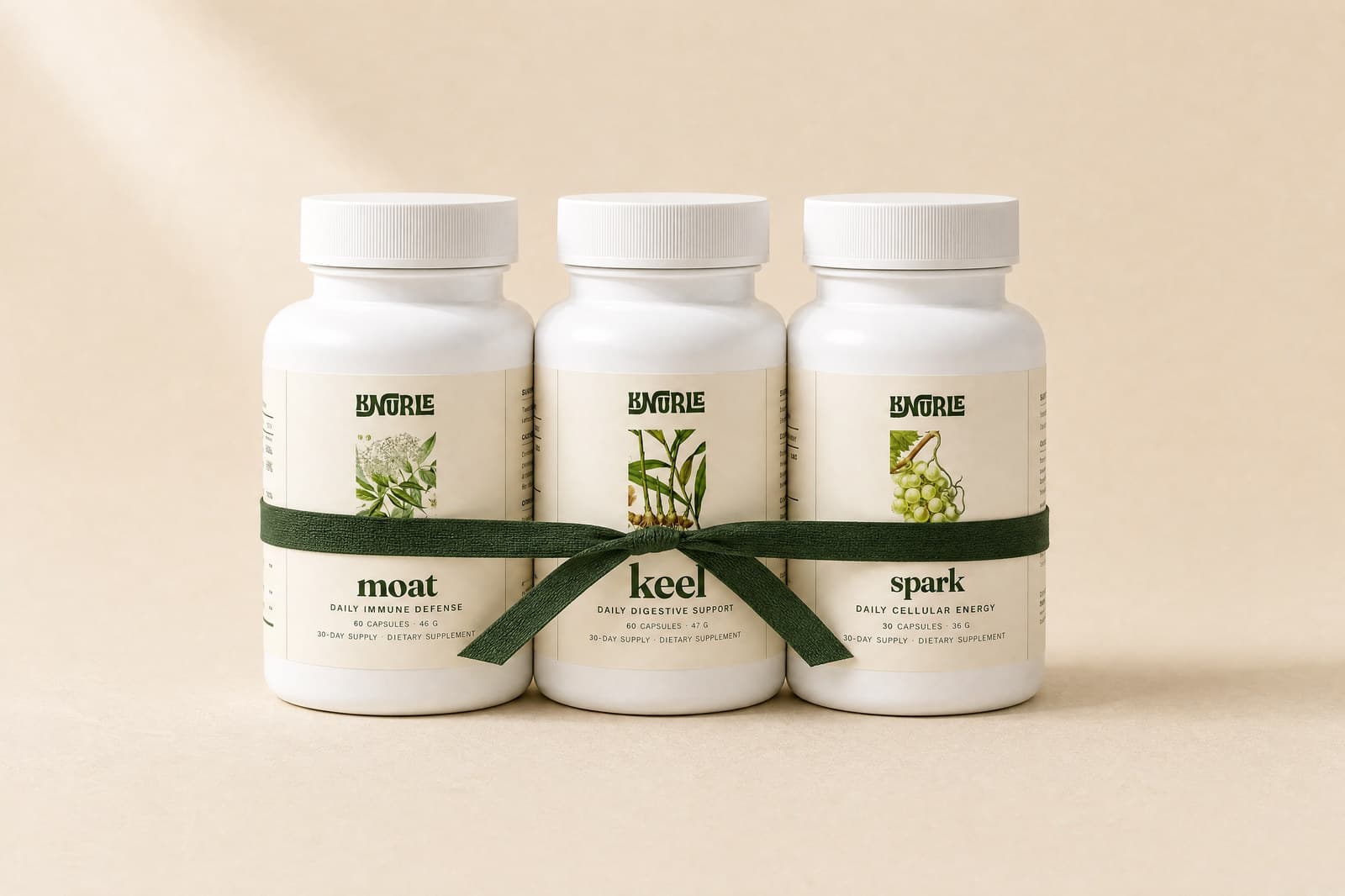
Spark is the simplest thing we make. One capsule, one ingredient: 500 mg of β-Nicotinamide Mononucleotide at 99.9% purity. That is the entire cast list.
NMN is a building block your body uses to make NAD+, a coenzyme involved in how your cells handle energy. The research is young and genuinely interesting, and we picked 500 mg because that is where the dose-finding trial landed rather than because bigger numbers look better on a bottle.
One a day, thirty in the bottle, so one bottle is one month. The capsule is vegetable cellulose, which makes Spark vegan, vegetarian and halal. Afternoon suits it nicely, if you are the sort of person who likes a reason. Take it with a glass of water and get on with your day.*
Made in the United States in an FDA-registered, GMP-certified facility, then packed and posted from Arvada, Colorado. The address on the label is ours, and there is usually a dog in the building.
 FDA-registered facilityGMP certifiedEvery dose printedOne job per bottleThird-party tested
Pip walks through what is in the bottle and how much of it, straight off the label. Sound is off until you tap it, which we think is only polite.
One active, one capsule. There is no official Daily Value for NMN, so there is no line to split on. Just milligrams.
** Daily Value not established for NMN. Other ingredients: HPMC (vegetable capsule), microcrystalline cellulose, silicon dioxide, magnesium stearate.

No loading phase, no cycling, no chart on the fridge. One capsule and a glass of water.

Six to eight ounces does it. Afternoon beat morning in the one trial that compared them.

Pin it to the kettle or the morning coffee. Turning up is the whole trick.

Not the bathroom. Skip it if the seal is broken. Keep out of reach of children.
Real customers, verified where marked. The whole spread is here, so have a proper scroll.
I was skeptical about cellular energy claims, but after about 10 days, I stopped needing a second coffee at 2 PM. You don't feel jittery—just consistently functional throughout long workdays.
Easy to swallow and doesn't upset my stomach even when taken before breakfast. Feeling noticeably less sluggish in the mornings.
Solid boost in baseline energy and workout recovery. Giving 4 stars only because $55 is on the higher side, though it clearly works better than standard B-complexes.
I’m in my late 40s and marathon train. My general daytime fatigue has improved noticeably over the past three weeks of daily use.
No heart racing, no sudden drop-off around 3 PM. Feels like natural vitality rather than stimulated alertness. Really impressed with the formulation.
Don't expect overnight miracles on day 1. By day 7 or 8, the cumulative effect was undeniable. Waking up feels much easier now.
I work 10-hour days in front of screens. Instead of grabbing a third cup of coffee at 3 PM, I find that taking Spark in the morning gives me endurance that carries straight into the evening.
I have sensitivity to most caffeine pills and stimulants. Spark doesn't cause any palpitations or digestive flutter. My energy just feels sustained and normal.
Four papers worth knowing about, written up in plain English. They test the ingredients rather than this exact bottle, and where that difference matters we have said so.
A multicentre, double-blind, placebo-controlled trial gave 80 healthy adults aged 40 to 65 either 300, 600 or 900 mg of NMN a day for 60 days. Blood NAD rose in every NMN group and rose further with dose. Six-minute walking distance improved, quality-of-life scores improved, and biological age held steady while the placebo group's crept up. No adverse events were attributed to NMN at any dose.
The catch600 mg came out as the sweet spot and 900 mg did no better, so we sit at 500 mg in one capsule. A tidy amount, chosen by the trial rather than by us.
A six-week, four-arm randomised trial put 48 recreationally trained runners on 300, 600 or 1200 mg a day alongside a structured training programme. Ventilatory threshold, a real marker of aerobic endurance, improved with dose against exercise-plus-placebo. The authors traced it to better oxygen use in skeletal muscle rather than any change in heart function.
The catchEveryone in this trial was training. NMN improved what the training was already doing; it did not replace it.
A 12-week double-blind trial gave 250 mg a day to 36 healthy middle-aged adults. Serum nicotinamide, a downstream marker of NAD metabolism, rose significantly, which is the direct confirmation that oral NMN feeds the pathway in people. Arterial stiffness trended better, more so in those with higher BMI or blood glucose.
The catchBlood NAD went up, which is the thing the trial set out to measure. The other readings hinted in the same direction without settling anything, so researchers are still looking.
A 12-week trial in 108 Japanese adults aged 65 and over compared morning against afternoon dosing at 250 mg a day, against placebo. Afternoon intake produced the meaningful results: less drowsiness and better lower-limb function on sit-to-stand, at moderate-to-large effect sizes. Sleep quality trended better too. Compliance was above 95%.
The catchThis was an over-65 group, so it may not transfer to a 35-year-old. But if you are going to pick a time, the evidence points at the afternoon rather than with breakfast.
Everything is made and packed in the United States, and your order sets off from a facility in Colorado. Free US shipping once you spend $50.
$5.95 standard, $10.99 express
Free over $50. USPS Ground Advantage in 2 to 4 business days, or Priority in 1 to 3. Alaska and Hawaii are not served yet.
Spark ships within the United States only.
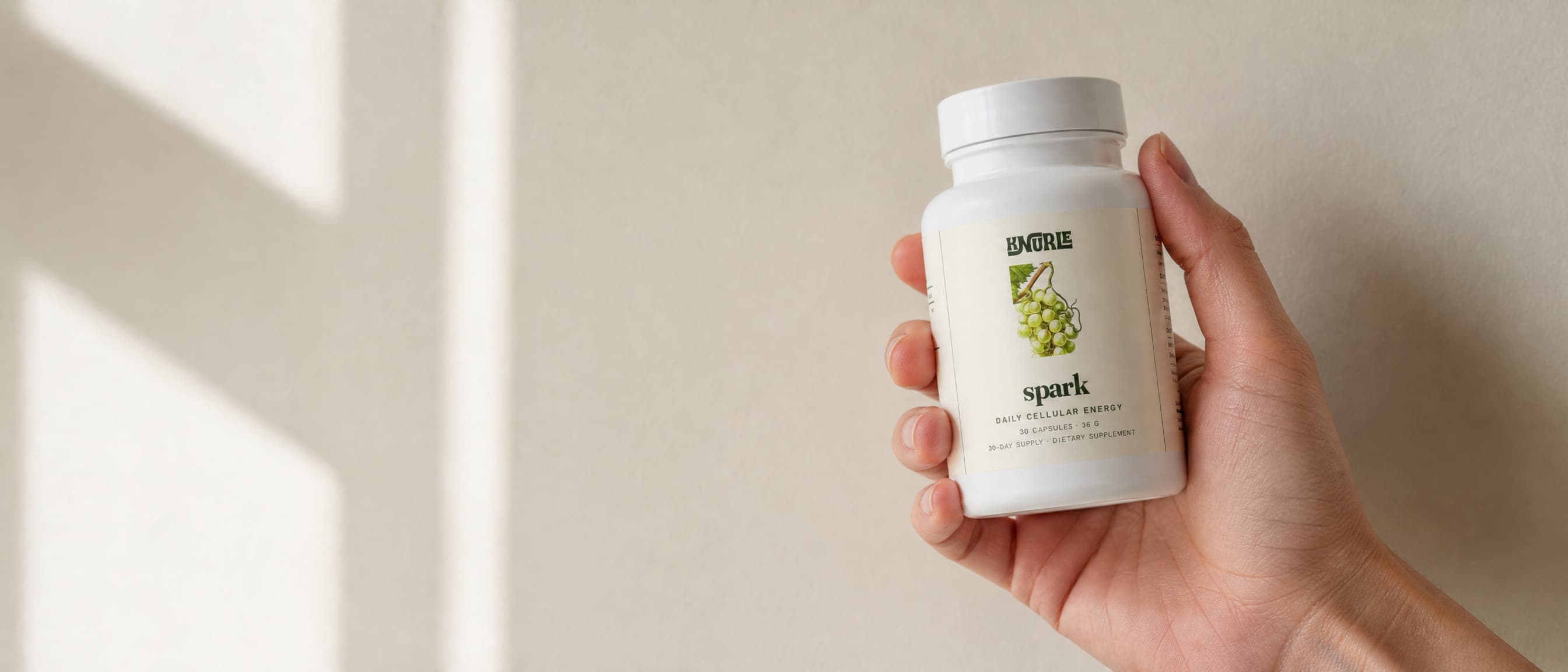
One capsule daily with 6-8 oz of water. If you want to follow the evidence rather than habit, take it in the afternoon: the one trial that compared morning against afternoon dosing found afternoon did better on drowsiness and lower-limb function. That was an over-65 group, so treat it as a nudge, not a rule.
Because the trial that went looking for the right dose tested 300, 600 and 900 mg, and 600 mg came out as the sweet spot. We sit at 500 mg, comfortably in that range, in one capsule.
Spark is not a stimulant, so do not wait for a whoosh. It is a quiet daily habit, like flossing but nicer. In the trials the things researchers measured moved over 8 to 12 weeks, which is a slower and less dramatic timescale than a Tuesday afternoon.
Yes. The capsule is HPMC, a vegetable cellulose capsule, so Spark is vegan, vegetarian and halal. That is different from Moat and Keel, which use gelatin capsules.
Because no Daily Value has been established for NMN. It is not a vitamin or a mineral, so there is no official reference amount to measure a percentage against. The label shows ** for that reason, and the milligrams are printed in full.
Talk to your clinician if you are pregnant, nursing, under 18, or managing a condition. The human trials so far are short, 8 to 12 weeks, and mostly in healthy middle-aged and older adults. There is no long-term safety data yet.
Asked something we have not answered? Write to us and an actual person writes back, usually the same day, occasionally with too much detail.
Ask us anything
$55.00 for 30 capsules, every milligram printed on the label, and free US shipping once you spend $50.