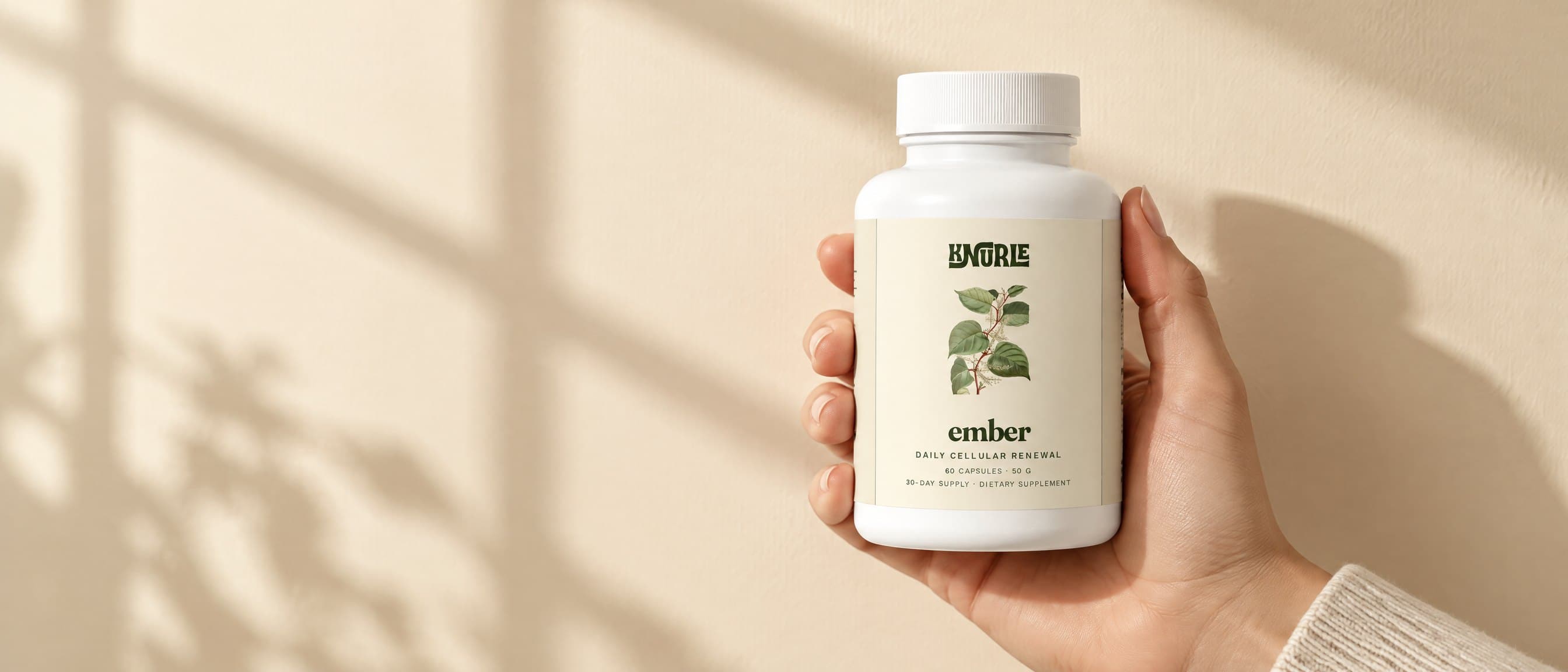
Four papers worth knowing about, written up in plain English. They test the ingredients rather than this exact bottle, and where that difference matters we have said so.
Memory, 26 weeks01
Resveratrol and a list of words
Twenty-three older adults took 200 mg of resveratrol a day for 26 weeks and were matched with 23 on placebo. The resveratrol group held on to more words half an hour after learning them, and brain scans showed the memory centre talking to its neighbours a bit more.
How strong3/5
The catchForty-six people is a small group, and they took 200 mg. Ember's knotweed extract works out at about 147 mg of resveratrol.
A few points02
Quercetin and blood pressure
A meta-analysis pooled seven trials with 587 people. Quercetin lowered systolic blood pressure by 3.04 mmHg and diastolic by 2.63. Taken alone, the trials using 500 mg a day or more showed an effect and the ones below it did not.
How strong4/5
The catchEmber has 250 mg, under the doses where the effect showed up. It is a finding about quercetin, and Ember is not a treatment for blood pressure.
Wider, within the hour03
One dose and an artery
Nineteen adults took single doses of 30, 90 and 270 mg of resveratrol, and a placebo, a week apart. An hour after each one, researchers measured how well an artery in the arm widened. The bigger the dose, the more it widened.
How strong2/5
The catchOne dose, one hour and nineteen people. A neat demonstration rather than a verdict.
A cousin, not NAD+04
Feeding the NAD pathway
A double-blind crossover trial gave 24 healthy middle-aged and older adults 1,000 mg a day of nicotinamide riboside for six weeks. NAD+ inside their blood cells rose by about 60% compared with placebo, and it was well tolerated.
How strong3/5
The catchNicotinamide riboside is a building block for NAD+, not NAD+ itself. Trials of NAD+ taken by mouth are only just beginning, so this is the nearest good evidence.